Introduction
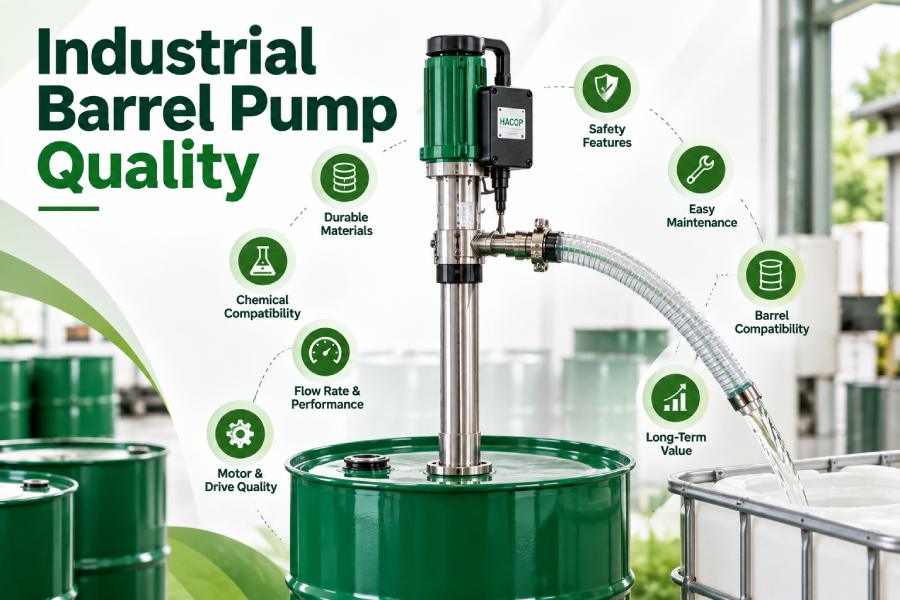
Choosing the right Barrel Pump Manufacturer in India is only the first step when purchasing equipment for transferring liquids from drums, barrels, and other containers. The real challenge is evaluating whether the pump can deliver reliable performance for your specific liquid, operating conditions, flow requirements, and working environment. This guide explains the key factors to check before making a purchase. A barrel pump may look like a relatively simple piece of equipment. In practice, its performance depends on several components working together.
The liquid being transferred also matters. A pump designed for water may not be suitable for aggressive chemicals, solvents, viscous liquids, or temperature-sensitive fluids.
That is why quality should never be judged by appearance or price alone.
Why Barrel Pump Quality Matters
An industrial barrel pump may be used repeatedly throughout a working day.
If the pump is poorly matched to the application, problems can include:
- Inconsistent flow
- Excessive wear
- Leakage
- Motor overload
- Premature component failure
- Difficult operation
- Increased maintenance
- Product contamination
- Unplanned downtime
A quality pump should provide a suitable combination of performance, compatibility, durability, safety, and maintainability.
The best evaluation starts with the application. Before comparing models, understand exactly what the pump needs to handle.
Start by identifying
- Type of liquid
- Liquid viscosity
- Required flow rate
- Required discharge pressure
- Temperature
- Container size
- Operating frequency
- Required hose length
- Power availability
- Required safety measures
These details make it much easier to determine whether a particular pump is suitable.
Check the Pump Material and Construction
The materials used in the pump can directly affect durability and chemical resistance. Depending on the application, pumps may use materials such as:
- Stainless steel
- Polypropylene
- PVDF
- Aluminium
- Other engineered materials
The correct material depends on the liquid being transferred.
For example, a chemically aggressive fluid may require materials with suitable resistance to that specific substance.
Look closely at
- Pump tube material
- Shaft material
- Housing construction
- Wetted components
- Seals
- Bearings
- Connections
- Motor housing
Do not assume that a material is suitable simply because it is commonly used in industrial equipment. Chemical compatibility should be confirmed for the actual fluid and operating conditions.
Evaluate Chemical Compatibility
Chemical compatibility is one of the most important considerations when evaluating a barrel pump. A pump can have excellent mechanical construction and still fail prematurely if its wetted materials are incompatible with the liquid.
Before purchasing, identify
- Chemical name
- Concentration
- Operating temperature
- Viscosity
- Density
- Corrosiveness
- Solvent characteristics
Then confirm whether the pump’s wetted materials are appropriate.
This is particularly important for applications involving
- Acids
- Alkalis
- Solvents
- Oils
- Lubricants
- Cleaning chemicals
- Process fluids
- Corrosive liquids
When in doubt, provide the pump supplier with the complete liquid details rather than relying on a general product description.
Look at Flow Rate and Pump Performance
Flow rate is one of the most visible pump specifications, but it should not be considered in isolation. A pump may advertise a particular maximum flow rate under specific conditions. Actual performance can change depending on factors such as liquid viscosity, discharge height, hose dimensions, fittings, and operating conditions.
Evaluate
- Flow rate
- Head or discharge pressure
- Suction conditions
- Liquid viscosity
- Hose length
- Discharge diameter
- Operating temperature
Why Maximum Flow Can Be Misleading
Suppose one pump has a higher maximum flow rate than another. That does not automatically mean it will transfer your liquid faster in actual use.
A thick liquid can behave very differently from a low-viscosity fluid. Similarly, a long discharge line can create additional resistance.
The useful question is
What flow rate can the pump realistically deliver for my application?
That is a much better purchasing metric.
Understand Pump Specifications
A good specification sheet should provide enough information to determine whether the pump fits your application.
Important barrel pump specifications may include
| Specification | Why It Matters |
|---|---|
| Flow rate | Indicates liquid transfer capability |
| Head or pressure | Helps determine discharge capability |
| Power | Shows drive requirements |
| Speed | Influences pumping performance |
| Tube length | Determines container compatibility |
| Tube diameter | Affects flow characteristics |
| Material | Influences chemical compatibility |
| Temperature range | Defines operating limits |
| Viscosity range | Indicates suitable liquid thickness |
| Motor type | Affects operation and maintenance |
Do not compare two pumps by looking at only one number. A proper comparison considers the complete specification set.
Check Motor and Drive Performance
The motor or drive system plays a major role in pump operation. Depending on the application, industrial barrel pumps can use different drive arrangements.
When evaluating a motor-driven pump, consider:
- Motor power
- Operating speed
- Speed control
- Duty cycle
- Electrical requirements
- Motor protection
- Compatibility with the operating environment
For variable applications, speed control can be useful because it allows operators to adjust the pumping rate instead of operating at one fixed speed.
However, the required control method depends on the pump design and application.
Examine Tube and Shaft Construction
The pump tube is inserted into the barrel or container and comes into direct contact with the liquid.
That makes its construction important.
Inspect
- Tube material
- Tube diameter
- Shaft material
- Shaft rigidity
- Connection design
- Overall finish
- Available lengths
The shaft should be suitable for the operating conditions without unnecessary vibration or instability. The tube should also be long enough to reach the required depth without creating handling difficulties.
For applications involving different container sizes, interchangeable or appropriately sized tubes may offer greater flexibility.
Consider Seals, Bearings, and Wetted Components
Small components can have a major impact on reliability. Seals, bearings, and other internal parts should be appropriate for the liquid and operating conditions.
Check whether the design addresses
- Chemical exposure
- Temperature
- Friction
- Continuous operation
- Wear
- Leakage prevention
The materials used for these components should be considered alongside the main pump body. A chemically compatible outer tube does not necessarily mean every internal component is equally compatible.
This is why complete material information is valuable.
Evaluate Safety Features
Liquid transfer can involve chemicals, flammable liquids, corrosive materials, or hazardous working environments. Safety should therefore be part of the purchasing decision.
Depending on the application, consider:
- Motor protection
- Electrical safety
- Emergency shut-off arrangements
- Secure hose connections
- Leak prevention
- Appropriate grounding requirements
- Suitable equipment for the working environment
- Operator protection
For potentially hazardous liquids or environments, the equipment should be selected according to the applicable workplace requirements and manufacturer’s guidance.
Operators should also receive appropriate training before using the pump.
Check Ease of Operation and Maintenance
A pump that performs well but takes excessive time to operate or maintain may not be the best choice for daily production.
Look for practical features such as:
- Easy starting and stopping
- Simple speed adjustment
- Convenient tube insertion
- Accessible components
- Easy cleaning
- Straightforward inspection
- Replaceable wear components
- Availability of spare parts
Ask yourself
Can an operator use and maintain this pump without unnecessary complexity?
If the answer is yes, the equipment is more likely to fit smoothly into everyday operations.
Consider Barrel and Drum Compatibility
Not every container is identical.
Barrels and drums can vary in
- Capacity
- Opening size
- Height
- Material
- Internal shape
- Closure design
The pump tube and mounting arrangement should suit the container.
Before purchasing, verify
- Tube length
- Tube diameter
- Container opening
- Connection requirements
- Required insertion depth
- Discharge arrangement
This simple check can prevent compatibility problems after installation.
Compare Total Cost, Not Just Purchase Price
A low purchase price can be attractive, but it does not tell you the complete cost of owning the equipment.
Consider
Purchase price + operating cost + maintenance + spare parts + downtime
A pump that costs slightly more but lasts longer and requires less maintenance may offer better value.
Compare
- Initial price
- Motor efficiency
- Spare parts
- Maintenance frequency
- Seal replacement
- Tube replacement
- Service support
- Expected operating life
This approach provides a more realistic picture of long-term value.
Common Mistakes to Avoid
-
Choosing Only by Price
The cheapest pump may not provide the required chemical compatibility or performance.
-
Comparing Maximum Flow Rates Only
Maximum flow does not always represent actual application performance.
-
Ignoring Liquid Properties
Viscosity, temperature, concentration, and chemical characteristics can significantly affect pump suitability.
-
Forgetting Container Dimensions
A pump must physically fit the barrel or drum.
-
Overlooking Spare Parts
Check whether important replacement components are readily available.
-
Buying More Capacity Than Necessary
Oversizing can increase costs without providing meaningful benefits.
-
Ignoring the Operating Environment
Electrical and safety requirements should match the location and liquid being handled.
Pros and Cons of a Quality Industrial Barrel Pump
Pros
- Reliable liquid transfer
- Consistent operation
- Better application compatibility
- Reduced leakage risk when properly selected
- Easier routine handling
- Potentially lower maintenance costs
- Longer service life with proper use
- Better operator confidence
Cons
- Higher-quality materials can increase initial cost
- Chemical compatibility requires careful evaluation
- Proper maintenance is still necessary
- Incorrect sizing can reduce expected performance
- Special applications may require customised configurations
The objective is not to find the most expensive pump.
It is to find the pump that is properly matched to the application.
Industrial Barrel Pump Evaluation Checklist
Before finalising your purchase, use this quick checklist.
Application
- Liquid identified
- Viscosity confirmed
- Temperature confirmed
- Chemical compatibility checked
- Required flow rate established
- Required discharge conditions reviewed
Construction
- Tube material reviewed
- Shaft material checked
- Seals evaluated
- Bearings considered
- Wetted components confirmed
Performance
- Flow rate verified
- Pressure or head requirements checked
- Motor capacity reviewed
- Operating speed confirmed
- Duty cycle considered
Practical Use
- Container compatibility confirmed
- Tube length suitable
- Hose connections suitable
- Operation is straightforward
- Maintenance requirements understood
Long-Term Value
- Spare parts available
- Service support available
- Warranty reviewed
- Operating cost considered
- Expected service life evaluated
Conclusion
Evaluating an industrial barrel pump requires more than checking its price or maximum flow rate.
The right pump should match the liquid, container, operating environment, required performance, and expected workload.
Before making a purchase, carefully review
- Material and construction
- Chemical compatibility
- Flow rate
- Pressure or head
- Motor performance
- Tube and shaft design
- Seals and bearings
- Safety features
- Container compatibility
- Maintenance requirements
- Spare parts and service
- Total ownership cost
A well-matched pump can make liquid transfer easier, more predictable, and more efficient.
The key is to evaluate the complete system rather than focusing on one specification. When application requirements and pump capabilities are properly matched, you are in a much stronger position to select equipment that delivers dependable performance over the long term.
FAQ’s
Barrel pump quality depends on factors such as construction materials, chemical compatibility, flow capability, component durability, motor performance, seals, bearings, safety features, and suitability for the intended application.