Introduction
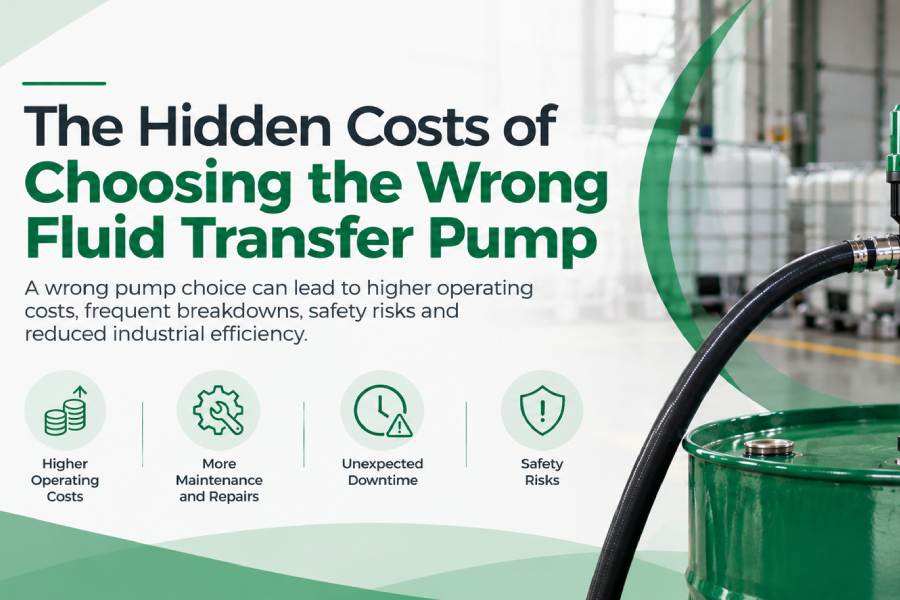
A pump that looks affordable at first can become an expensive mistake when it consumes excessive energy, requires frequent repairs, or fails to handle the liquid it was designed to transfer. For industrial facilities, even a minor equipment mismatch can affect productivity, workplace safety, and operating costs. Choosing the right Motorized Barrel Pump is one way to evaluate fluid transfer requirements and avoid unnecessary expenses when handling compatible liquids.
From chemical processing and manufacturing to oil handling and warehouse operations, selecting the right pumping system is essential for maintaining smooth workflows. However, businesses often focus on the initial purchase price instead of considering the equipment’s total cost throughout its working life.
This article explores the hidden costs of incorrect pump selection, common mistakes businesses make, and practical ways to choose reliable pumping equipment for long-term performance.
Why Choosing the Right Pump Matters
An industrial pump does more than move liquid from one container to another. It directly affects production speed, material handling, equipment reliability, and worker safety.
The right pump should match the liquid’s properties, the required flow rate, the operating environment, and the transfer distance.
Before purchasing a pump, consider these factors
- Liquid compatibility: Check viscosity, chemical composition, temperature, and potential corrosiveness.
- Required flow rate: Determine how much liquid needs to be transferred within a specific period.
- Operating pressure: Consider the pressure needed to move liquid through the system.
- Container and installation type: Identify whether the application involves drums, barrels, tanks, or fixed pipelines.
- Power source: Evaluate the availability of electrical, pneumatic, or manual operation.
- Safety requirements: Consider grounding, hazardous-area classification, leakage prevention, and material compatibility where applicable.
A pump that meets these requirements can help reduce avoidable expenses and maintain consistent operations.
The Hidden Costs of Choosing the Wrong Pump
The purchase price represents only one part of the total cost of ownership. An unsuitable pump can create several expenses that remain unnoticed until they begin affecting daily operations.
1. Higher Energy Consumption
An incorrectly sized pump may consume more energy than necessary to achieve the required flow rate.
For example, a pump selected with excessive capacity may operate inefficiently when the application requires a lower flow rate. Similarly, a pump that cannot meet the system’s pressure requirements may struggle to deliver the expected performance.
How to reduce this cost
- Match pump capacity to actual operating requirements.
- Review the pump’s performance curve where available.
- Consider motor efficiency and expected operating hours.
- Avoid selecting equipment based solely on maximum flow rate.
Choosing the right capacity helps prevent unnecessary energy consumption and supports more predictable operating expenses.
2. Frequent Maintenance and Repair Expenses
When a pump is incompatible with the liquid or operating conditions, components may wear out prematurely.
Common problems include seal deterioration, corrosion, blockages, excessive vibration, and motor overheating.
For instance, a pump designed for a low-viscosity liquid may struggle when handling a thicker material. Likewise, incompatible construction materials can deteriorate when exposed to certain chemicals.
Potential consequences include
- Increased spending on replacement parts
- More frequent maintenance interventions
- Additional technician and labour costs
- Shorter equipment service life
Selecting appropriate materials and a suitable pump design can help reduce these problems.
3. Production Downtime and Delayed Deliveries
A pump failure can interrupt an entire production process, particularly when liquid transfer is a critical step.
Consider a manufacturing facility that depends on a steady supply of process liquid. If its pump stops working unexpectedly, operators may need to pause production while technicians inspect the equipment or arrange replacement parts.
The financial impact can extend beyond the repair bill.
Businesses may experience
- Missed production targets
- Delayed customer orders
- Idle workers and equipment
- Overtime expenses
- Additional transportation or rescheduling costs
When evaluating liquid transfer equipment, reliability and serviceability deserve as much attention as the initial price.
4. Product Loss Through Leakage and Spillage
An unsuitable pump, poorly matched seals, or incorrect connections can increase the risk of leakage during liquid transfer.
Spills can lead to wasted raw materials, contaminated work areas, cleaning expenses, and production interruptions. When hazardous or corrosive liquids are involved, the consequences may be more serious.
To minimise these risks
- Confirm compatibility between the liquid, pump body, seals, and hoses.
- Inspect connections before operation.
- Follow the manufacturer’s installation instructions.
- Establish a regular inspection and maintenance schedule.
- Use suitable spill containment and personal protective equipment.
Proper equipment selection is an important part of preventing avoidable material loss.
5. Increased Workplace Safety Risks
Pump selection also affects the safety of operators and maintenance personnel.
Using unsuitable equipment for flammable, corrosive, or otherwise hazardous liquids can create risks such as chemical exposure, leaks, ignition hazards, and equipment failure.
For example, applications involving flammable liquids may require specifically approved equipment, suitable electrical components, bonding and grounding arrangements, and compliance with applicable hazardous-area requirements.
Businesses should never assume that a pump is safe for a particular liquid simply because it can physically move that liquid.
Before installation, verify
- Chemical and temperature compatibility
- Applicable electrical and hazardous-area certifications
- Safe operating pressure and flow limits
- Manufacturer handling instructions
- Required protective measures and operating procedures
A suitable pump supports safer handling, but it must be used as part of a properly designed and maintained system.
6. Shorter Equipment Lifespan
Pumps operating outside their intended limits may experience excessive wear and reduced reliability. Incorrect sizing, frequent dry running, unsuitable liquid viscosity, and operation beyond recommended pressure limits can contribute to premature failure.
Replacing equipment earlier than expected increases capital expenditure and may require additional installation work. A more reliable approach is to evaluate the complete application before purchase rather than choosing a pump based only on price or appearance.
7. Hidden Labour and Operating Costs
Manual workarounds can become another overlooked expense when pumping equipment performs poorly. If a transfer process is slow or unreliable, employees may need to spend more time moving containers, monitoring liquid levels, cleaning spills, or troubleshooting operational problems.
Over time, these activities reduce the time available for productive work. Suitable industrial fluid transfer pump selection can help streamline handling processes, although the actual savings depend on the application, operating conditions, and equipment performance.
Common Pump Selection Mistakes
Businesses can avoid many unnecessary expenses by identifying common purchasing errors before installation.
Mistake 1: Choosing Based Only on Purchase Price
A low-cost pump may appear attractive initially. However, frequent maintenance, high energy use, or poor reliability can make it more expensive over its working life.
Better approach: Compare total ownership costs, including purchase, installation, energy, maintenance, and expected replacement expenses.
Mistake 2: Ignoring Liquid Properties
Different liquids require different pump designs and construction materials.
Viscosity, chemical compatibility, temperature, and the presence of suspended particles can all affect performance.
Better approach: Provide the supplier with accurate liquid specifications before selecting the equipment.
Mistake 3: Overlooking Flow and Pressure Requirements
A pump that delivers the wrong flow rate can slow down operations or create problems within the transfer system.
Better approach: Calculate the required transfer rate and account for pipe length, elevation changes, fittings, and system resistance.
Mistake 4: Neglecting Maintenance Requirements
Some pumps require more frequent inspections or specialised servicing than others.
Better approach: Review maintenance intervals, spare-part availability, service requirements, and manufacturer recommendations before purchasing.
Mistake 5: Failing to Consider Future Requirements
Production volumes and process conditions can change as a business grows.
Better approach: Consider realistic future demand while avoiding excessive oversizing. Select equipment that suits the expected operating range.
How to Choose the Right Fluid Transfer Pump
A systematic selection process helps businesses identify suitable equipment and minimise avoidable operating expenses.
Step 1: Define the Application
Determine exactly where and how the pump will be used.
Ask the following questions
- Is the liquid being transferred from a drum, barrel, tank, or pipeline?
- How frequently will the pump operate?
- What quantity must be transferred per cycle?
- Is the application temporary, intermittent, or continuous?
Clear application requirements make equipment comparisons more meaningful.
Step 2: Evaluate Liquid Compatibility
Identify the liquid’s viscosity, temperature, chemical properties, and any relevant handling restrictions.
Check that the pump’s wetted components, seals, and accessories are suitable for the specific application.
For hazardous liquids, obtain confirmation from the manufacturer rather than relying on general product descriptions.
Step 3: Calculate Flow Rate and System Requirements
Estimate the required flow rate and determine the pressure or total dynamic head needed for the installation.
Remember that actual performance depends on the complete system, not just the pump’s advertised maximum capacity.
A qualified supplier or engineer can help verify these calculations for complex applications.
Step 4: Compare Available Pumping Technologies
Different applications may require different pumping arrangements.
| Pumping option | Common application considerations |
|---|---|
| Electric pumps | Suitable where electrical power is available and the pump is rated for the liquid and environment |
| Pneumatic pumps | Useful where compatible compressed-air infrastructure is available |
| Manual pumps | May suit occasional transfers involving relatively small quantities |
| Specialised chemical pumps | Designed for specified chemical compatibility and operating requirements |
These categories are general examples. The correct choice depends on the specific liquid, flow requirements, installation, and safety conditions.
Step 5: Evaluate the Complete Cost of Ownership
Compare more than the purchase price.
Include the following expenses in your assessment
- Initial equipment cost
- Installation and accessories
- Electricity or compressed-air consumption
- Preventive maintenance
- Spare parts and servicing
- Expected downtime
- Equipment replacement
A slightly higher initial investment may offer better long-term value when it provides suitable performance and reliability.
Step 6: Review the Supplier’s Technical Support
Reliable technical guidance can make equipment selection easier and help prevent installation errors.
Before finalising your purchase, ask about product specifications, operating limits, spare parts, warranty conditions, and after-sales assistance.
For application-specific requirements, explore the available products at Hacop Pumps and confirm the suitability of the selected model with the supplier.
Pros and Cons of Proper Pump Selection
Selecting a pump that matches the application offers several advantages, although some considerations remain important.
Pros
- Lower operating expenses: Appropriate sizing can help avoid unnecessary energy use.
- Improved reliability: Compatible materials and suitable operating conditions can reduce premature wear.
- Better productivity: Consistent transfer performance can help minimise process interruptions.
- Safer handling: Suitable equipment can reduce avoidable leakage and handling risks.
- More predictable maintenance: Understanding service requirements makes maintenance planning easier.
Cons and Considerations
- Higher initial investment: A specialised pump may cost more than a basic alternative.
- Technical evaluation required: Some applications need engineering calculations and compatibility checks.
- Ongoing maintenance remains necessary: Even well-selected equipment needs inspection and servicing.
- Performance depends on installation: Incorrect piping, unsuitable accessories, or poor operating practices can undermine an otherwise appropriate pump.
The goal is not simply to purchase the most expensive equipment. It is to select a suitable, reliable solution that meets the application’s requirements.
Conclusion
Choosing the wrong pump can create expenses that extend far beyond the purchase price. Higher energy consumption, repeated repairs, production delays, product loss, and safety concerns can all affect industrial operations.
Businesses can minimise these risks by evaluating liquid properties, flow requirements, operating conditions, equipment compatibility, and long-term maintenance needs before making a purchase. The most effective solution is not necessarily the cheapest or the largest pump. It is the one that meets the application’s technical requirements while delivering dependable performance over its working life.